
As the deadly second wave of the Covid-19 pandemic rages on, startups and technology firms are realising the burnout effect it is having on employees. Many have shortened their work weeks to four days, while others have made provisions for more time off for employees to help them rejuvenate or care for loved ones.

The US government has removed a regulation proposed by former president Donald Trump's administration that sought to narrow the definition of "specialty occupation" under the H-1B visa regime. The change comes as a relief for Indian information technology firms, which are among the largest users of such visas. "The Department of Homeland Security (DHS) has formally vacated a regulation that would have redefined the H-1B specialty occupation, restricted off site placement of H-1B employees, and otherwise increased employer compliance obligations. "The vacatur follows a federal court ruling that set aside the regulation because the agency did not have good cause to bypass notice and comment rulemaking, in violation of the Administrative Procedures Act," explained immigration law firm Fragomen.
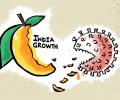
Those hardest hit by the second wave of the pandemic have been blue-collared workers, doctors and healthcare workers, law and order and municipal personnel, individuals eking out daily livelihood, and small businesses. And there should be more measures taken to alleviate their pain, the Reserve Bank of India (RBI) said on Monday. The report also indicated that the RBI's growth numbers might have to be revisited as the central bank's real GDP growth projection of 26.2 per cent given in the MPC's resolution of April 7 for the first quarter of 2021-22, were "made before the full fury of the resurgence." Nevertheless, the "resurgence of COVID-19 has dented but not debilitated economic activity in the first half of Q1: 2021-22.
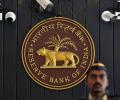
The Reserve Bank of India (RBI) is precariously balancing two opposing objectives - maintaining easy financial condition in the domestic market, while ensuring external stability - and economists have started taking note. They say India is going through the classic trilemma of the 'Impossible Trinity'. The RBI cannot have an independent monetary policy (setting domestic interest rates) in an environment of an open capital account and flexible exchange rates. What is even more complicated for the central bank now is that financial market stability overlays all the other three objectives.

With scrutiny that comes with a public listing, Deepinder Goyal's leadership could face its sternest test yet.

Theoretically, the currency with the public should expand in sync with the nominal income, which again moves in relation to the nominal growth rate of the economy. But the correlation breaks easily when other factors come into play, says Anup Roy.

Covid-19, US yields, dollar to weigh on equity flows in the near term.
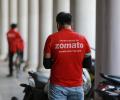
Zomato said it has consistently gained market share over the last four years to become the category leader in the food delivery space in India in terms of gross order value from October 1, 2020 to March 31, 2021.

To be able to manage any such uptick, Indian IT services players are hiring more locals, and relying on hybrid work models.

Home ministry asks IT ministry to order social media platforms to remove around 100 posts or URLs.

Amid oxygen shortage and a faltering health system in the country, India is seeing over 300,000 cases daily.

Although such alerts are not compulsory for the banks, this may become the norm now if payments are missed even for a day.

New-generation private sector banks such as ICICI, HDFC, Axis, Kotak etcetera owe their existence to the recommendations of the first Narasimham Committee.

Infosys, Facebook, Genpact, and Cognizant, among others, have reached out to employees and offered support in different ways as the second wave of Covid cases sees an exponential rise. Companies are asking employees to stay indoors and prioritise the health and safety of their families. This is of significance as several information technology firms were going to take a call on work-from-home from June and had plans to allow some employees to come back to work.

Domino's India data that included sensitive customer information such as their names, phone numbers, and credit card details has allegedly been breached and put on sale on the dark web. According to tweets by Israel-based Co-Founder and Chief Technology Officer of cybercrime intelligence firm Hudson Rock, Alon Gal, the data is worth 13 terabytes (TB). He tweeted on Sunday that the data includes as many as 180 million order details, including 1 million credit card details. The data, said Gal, was up for sale on the dark web. The threat actor, he said, was asking for $550,000 for the data.


The content eligible for review includes posts, status updates, photos, videos, comments, and shares.

The sudden movement of the rupee - post the monetary policy - is not a reason to panic, said currency dealers. According to them, a correction was overdue for the rupee that remained the best performing currency in the region for well over a month. The rupee closed at 74.72 a dollar on Friday from its previous close of 74.60. It had dropped 1.52 per cent against the dollar on April 7 after the Reserve Bank of India (RBI) announced its monetary policy, committing to buy Rs 1 trillion of bonds in the June quarter. A weak rupee goes well with the export narrative of the government, and is consistent with the RBI's intervention strategy that prevented an appreciation.

For development finance institution to succeed now, the government must stand like a rock behind it and be patient.

If the data breach is found to be genuine, and if the company is found guilty on the grounds of dereliction of duty, or misleading the general public and the RBI about the data breach, actions taken against it will be severe, the person quoted above said.
 © 2026 Rediff.com - Advertise with us - Disclaimer - Privacy Policy - Sitemap - Feedback - About us - Terms of use - Grievances